


VideoSDK is the best video SDK for developers who need a fast, affordable, and fully customizable real-time communication platform. Agora, Twilio, Vonage, and Zoom each serve specific use cases, but VideoSDK delivers the strongest combination of pricing, developer experience, and built-in AI features in 2026.
Picking the wrong video SDK costs your team weeks of rework. Five platforms dominate this space: VideoSDK, Agora, Twilio, Vonage, and Zoom Video SDK. Each targets a different buyer. This article breaks down pricing, features, audio/video quality, and support so you can choose the right one without guessing.
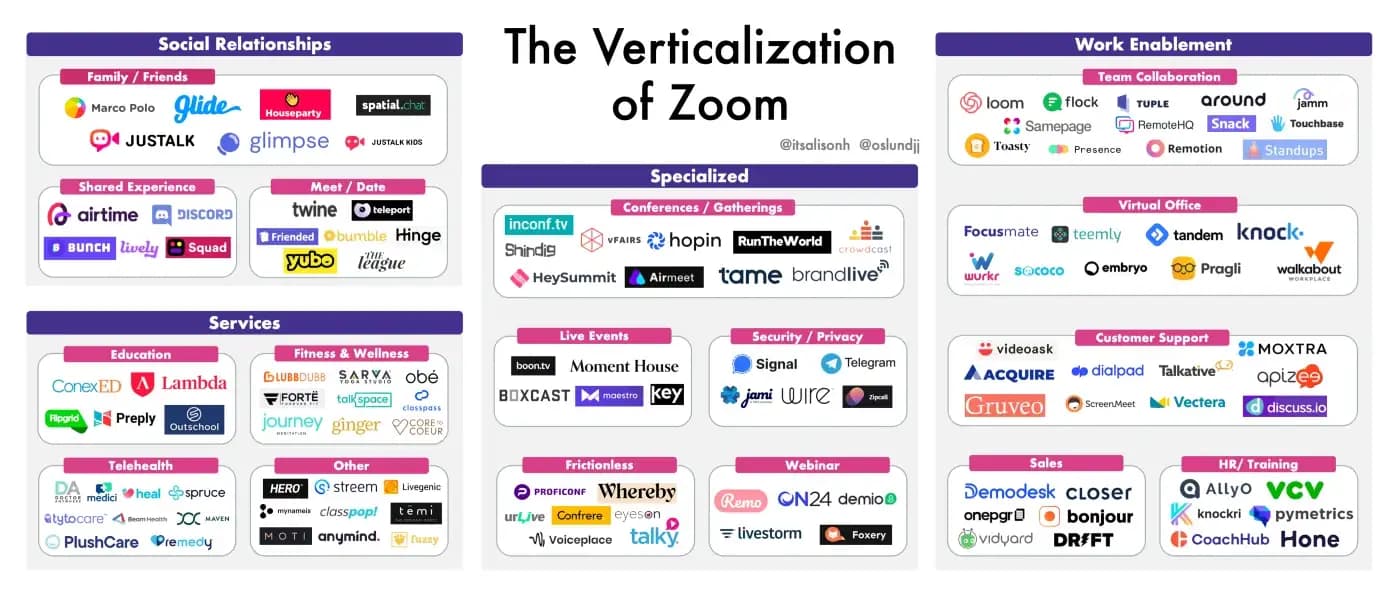
The 'Verticalization' of Zoom
The number of 5G subscribers globally is expected to reach 5 billion by 2028.
According to the latest edition of the Ericsson Mobility Report, 65% of the world's population would have 5G coverage, with networks handling 45% of global mobile data traffic.
Video traffic in mobile networks is expected to increase by around 30% per year until 2025. It will account for nearly 75% of mobile data traffic, up from a little more than 60% in 2019.
This article will evaluate solutions based on six criteria:
Agora: Pioneering Real-Time Communication
What is Agora.io?
Agora is a company that offers a real-time video and audio communication platform. The Agora platform makes it simple for developers to create interactive speech and video apps by offering APIs that allow them to quickly add real-time voice and video features to their applications.
The Agora platform may be used to create applications for a wide range of use cases, such as real-time video conferencing, live streaming, online education, and customer support. The technology is built to serve huge numbers of users and can offer high-quality audio and video even in low-bandwidth conditions.
Agora is based in China and has offices in USA. Since its inception in 2012, the firm has grown to become a major provider of real-time communication solutions for businesses and organizations.
Twilio: Enhancing Real-Time Engagement within Apps
What is Twilio and Twilio Video?
Twilio is a cloud communications platform that allows developers to create, grow, and manage communication solutions through the use of a set of APIs. Twilio's APIs enable developers to add voice, text, and messaging capabilities to their apps, allowing them to communicate in real time with their users.
Twilio Video may be used to create apps for a wide range of applications, including video conferencing, live streaming, online education, and customer care to making it a valuable tool for the best companies for customer experience. The technology is built to serve huge numbers of users and can give better video even in reflects the common.
Twilio was formed in 2008 and is located in San Francisco, California. It has now grown to become a global provider of cloud communication solutions, servicing customers all over the world.
Vonage Video: Seamless Integration of Communication APIs
What is Vonage and Vonage Video?
Vonage is a cloud communications platform provider that enables businesses and organizations to design, scale, and run communication solutions using a set of APIs (Application Programming Interfaces). Vonage's platform enables developers to integrate phone, message, and video capabilities into their apps, allowing them to engage with their consumers in real time.
Vonage Video is a cloud communications APIS for real-time video communication platform. Vonage Video makes it simple for developers to develop interactive voice and video apps by providing APIs that allow them to rapidly add real-time video capabilities to their applications.
Vonage was founded in 1998 in Holmdel, New Jersey. It has now evolved into a global provider of cloud communication solutions, serving customers worldwide.
Zoom: Simplifying Video Conferencing
What is Zoom Video SDK?
Zoom Video SDK is a collection of software development frameworks and tools made available by Zoom that enable developers to create unique video-based apps that interface with Zoom's platform. Zoom is a firm that offers a cloud-based videoconferencing and collaboration platform that allows users to connect and speak with one another in real time via the internet.
The Zoom SDK contains a number of APIs (Application Programming Interfaces) and SDKs (Software Development Kits) that allow developers to integrate video, audio, and messaging capabilities into their applications. Engineers may utilize the Zoom SDK to create unique video-based apps for a range of purposes such as videoconferencing, online education, and video broadcasts.
Zoom Video Communications, Inc. (or simply Zoom) is a San Jose, California-based American communications technology company.
VideoSDK: Developer-Friendly Live Audio & Video Integration
What is VideoSDK?
VideoSDK provides an API that allows developers to easily add powerful, extensible, scalable, and resilient audio-video features to their apps with just a few lines of code. Add live audio and video experiences to any platform in minutes. It abstracts the business logic of the conference room in templates. Client-side SDKs include all edge cases within the SDK rather than leaving it to the application.
Audio-Video: Agora vs Twilio vs Vonage vs Zoom vs VideoSDK
| Agora | Twilio | Vonage | Zoom | VideoSDK | |
|---|---|---|---|---|---|
| Audio Calling | ✔ Built using the SDK | ✔ Built using the SDK | ✔ Built using the SDK | ✔ Built using the SDK | ✔ Built using the SDK |
| Video Calling | ✔ Built using the SDK | ✔ Built using the SDK | ✔ Built using the SDK | ✔ Built using the SDK | ✔ Built using the SDK |
| ✔ Interactive Livestreaming | ✔ Built with Agora's Live Streaming SDK | ✔ Built with Twilio Live | ✔ Built with Vonage Live | ✘ No explicit mention in Zoom documentation | ✔ Built using the Video SDK |
Features: Agora vs Twilio vs Vonage vs Zoom vs VideoSDK
| Agora | Twilio | Vonage | Zoom | VideoSDK | |
| Recording | ✔ Enabled using the dashboard and API | ✔ Enabled using the dashboard and API | ✔ Enabled using the dashboard and API | ✔ Enabled using the dashboard and API | ✔ Enabled using the dashboard and API |
| External Streaming (RTMP Output) | ✔ Built using the Agora SDK | ✘ No direct support for RTMP | ✔ Built using the Vonage SDK | ✔ Built using the Zoom SDK | ✔ Built using the Video SDK |
| Screen share | ✔ Built using the SDK. | ✔ Built using getDisplayMedia API | ✔ Built using the SDK | ✔ Built using the SDK | ✔ Built using the SDK |
| Remote mute | ✔ Built using the Agora RTM SDK. | ✔ Built using the Twilio Live SDK | ✔ Built using the SDK | ✔ Built using the SDK | ✔ Built using the SDK |
| Active Speaker detection | ✔ Built using the SDK. | ✔ Built using the SDK | ✔ Built using the SDK | ✔ Built using the SDK | ✔ Built using the SDK |
| Noise reduction | ✔ Built using the third party integration | ✔ Built using the SDK | ✔ Built using the SDK | ✔ Built using the SDK | ✔ Available, currently in Beta. |
Interactive Features: Agora vs Twilio vs Vonage vs Zoom vs VideoSDK
| Agora | Twilio | Vonage | Zoom | VideoSDK | |
| Chat | ✔ Built using the RTM SDK | ✔ Built using Twilio Conversations API. | ✔ Built using the Separate SDK | ✔ Built using the Separate SDK | ✔ Built using Pub/Sub API |
| Whiteboard | ✔ Built using the SDK | ✔ Built using the DataTrack API/SDK. | ✘ Unavailable | ✘ No explicit mention in Zoom docs | ✔ Built using Pub/Sub API |
| Live polls, Q&A, Quizzes | ✔ Built using the Separate SDK | ✔ Built using the DataTrack API/SDK. | ✘ Unavailable | ✘ No explicit mention in Zoom docs | ✔ Built using Pub/Sub API |
| Raise hand | ✔ Built using the agora RTM SDK | ✔ Built using the DataTrack API. | ✘ No explicit mention in Vonage docs | ✘ No explicit mention in Zoom docs | ✔ Built using Pub/Sub API |
| Emoji | ✔ Built using the Agora RTM SDK | ✔ Built using the DataTrack API | ✘ No explicit mention in Vonage docs | ✘ Unavailable | ✔ Built using Pub/Sub API |
| Notifications | ✔ Built using the Agora RTM SDK. | ✘ No explicit mention in Twilio Video docs | ✔ Built using the SDK | ✘ No explicit mention in Zoom docs | ✔ Built using Pub/Sub API |
| Background | ✔ Virtual Background extension available | ✔ Built using the Twilio video processor SDK | ✔ Built using the SDK | ✔ Built using the SDK | ✔ Built using Custom Video Track |
Resources: Agora Docs, Twilio Docs, Zoom Video SDK Docs, Vonage Docs, Video SDK Docs
Pricing: Agora vs Twilio vs Vonage vs Zoom vs VideoSDK
| Agora | Twilio | Vonage | Zoom | VideoSDK | |
| Pricing Model | On the basis of usage | On the basis of usage | On the basis of usage + fixed cost | On the basis of usage | On the basis of usage |
| Audio-Video Conferencing |
Price per 1,000 minutes depending on aggregate resolution Audio: $0.99 Video HD: $3.99 Video Full HD: $8.99 Video 2K: $15.99 Video 2K+: $35.99 | Twilio P2P: $1.5 per participant per minute 1,000 minutes Twilio Video Groups: $4.00 per participant minute 1,000 minutes | Vonage Video Groups: $4 per participant minute 1,000 minutes +($9.99 par month) | Zoom Video Groups: $3.5 per participant minute 1,000 minutes — $1,000/ year with 30,000 free minutes included per month. Priced at $0.003/min after free minutes | Video SDK Video Groups:Audio: $0.60 Video SD: $2.00 Video HD: $3.00 Video Full HD: $7.00 |
| Agora | Twilio | Vonage | Zoom | VideoSDK | |
| Streaming | The price of interactive live streaming is determined by the number of participant minutes for the host and audience, as well as the latency. Details can be found here.. |
Twilio Live—Video streaming: Broadcaster: $0.004/min Viewer: $0.0025/min Encoding: $0.010/min | The Vonage price of interactive live streaming is determined by the number of participant minutes for the host and audience, as well as the latency. Details can be found here.. | Zoom Video SDK: Streaming is allowed, but information on pricing is unavailable. |
10,000 free minutes per month. Broadcaster: $0.002/min Viewer: $0.0015/min Encoding: $0.04/min |
| Agora | Twilio | Vonage | Zoom | Video SDK | |
| Recording |
Agora charge per participant minute:
Per 1000 Per participant minute: : Voice: $1.49 HD: $5.99 Full HD: $13.49 2K: $23.99 2K+: $53.99 Web Page Recording: HD $14.00 FHD $28.00 |
Twilio charge per Recording participant minute: $0.0125 Per composed minute $0.04 |
Vonage charge per Recording participant minute: $0.0125 Per composed minute SD: $1.49 HD: $0.035 Full HD: $0.045 | Zoom Video SDK:Recording available with a Video SDK account and a Cloud Recording Storage Plan. Information on pricing is unavailable. |
Web Page Recording: $0.015/min |
Support: Agora vs Twilio vs Vonage vs Zoom vs VideoSDK
| Agora | Twilio | Vonage | Zoom | VideoSDK | |
| Support plan monthly cost |
Standard Plan: $1200/month Premium Plan: $2900/month Enterprise Plan: $4900/month |
Production Plan: 4% of monthly spend (or $250 minimum)
Business Plan: 6% of monthly spend (or $1,500 minimum) Personalized Plan: 8% of monthly spend (or $5,000 minimum) |
Priority: $750/month
Premium: $1,500/month Premier: $3,000/month |
Premier Developer Support:-
Bronze - $675/month Silver - $1,300/month Gold - $1,900/month | FREE for everyone |
| Agora | Twilio | Vonage | Zoom | VideoSDK | |
| Access to TAM / CS Engineer |
Premium plan:
- Access to CS enginee
- Code Review
Enterprise plan - Everything in the Premium plan plus access to SA Engineer & Live Developer Consultation and Training. | Only available in the Personalized plan. The plan also provides a support escalation line and quarterly status review. | Available for Premier customers. | Premier Developer Support provides developer enablement, onboarding, training, and architectural consultations. | All paying customers have access to a dedicated CS manager and a solutions engineer. |
| Agora | Twilio | Vonage | Zoom | VideoSDK | |
| SLAs |
Standard Plan:
P1 – 4 Business hours
P2 – 16 business hours
P3 – 24 business hours
Premium Plan: P1 – 3 hours(24/7) P2 – 8 business hours P3 – 16 business hours Enterprise Plan: P1 – 2 hours (24/7) P2 – 5 business hours P3 – 9 business hours |
Production Plan:
P1 - 3 business hours
P2 - 6 business hours
P3 - 9 business hours
Business Plan: P1 - 1 hour (24/7) P2 - 2 business hours P3 - 3 business hour Personalized Plan: P1 - 1 hour (24/7) P2 - 2 business hours P3 - 3 business hours |
Service Level Targets (SLT) for the initial response for Premium Plus:
S1: 30 minutes S2: 2 hours S3: 4 hours |
Premier Developer Support:-
Developer: P1 - N/A P2 - N/A P3 - N/A Bronze: P1 - 24 hours P2 - 48 hours P3 - 72 hours Silver: P1 - 6 hours P2 - 12 hours P3 - 24 hours Gold: P1 - 4 hours P2 - 8 hours P3 - 16 hours | Critical - 8 hours Major - 72 hours Minor - Mutually aligned timeline |
| Agora | Twilio | Vonage | Zoom | Video SDK | |
| Channels |
Submit a ticket directly through the Agora Console.
All support plans offer Ticket/Email support. Premium Enterprise plans to offer Emergency Phone Number Access. | Production, Business, and Personalize plans provide live support options with live chat on all three, and phone support on the latter two. Only email support on the Developer plan. |
Premier users:
- Email support - Chat support - Phone support | No specific communication channels are explicitly mentioned in the Premier Developer Support doc. |
Interact with support directly on Slack, Discord. Paying customers can access dedicated Slack support. |
| Agora | Twilio | Vonage | Zoom | Video SDK | |
| Access to Testing | Testing is not expressly supported. | Testing is not expressly supported. | Testing is not expressly supported. | Testing is not expressly supported. | All paid accounts get access to testing support from Video SDK. |
| Agora | Twilio | Vonage | Zoom | VideoSDK | |
| Community Support | Agora’s Stack Overflow and Community Slack Channel | Twilio Forum now largely shifted to Stack Overflow as Twilio Collective. | Vonage'S Slack Community | Zoom Community | VideoSDK has an active Discord Community |
Resources: Agora Pricing, Twilio Pricing, Zoom Video SDK Pricing, Vonage Video API Pricing, Video SDK Pricing
Definitions Glossary
WebRTC: Web Real-Time Communication is defined as an open-source project and W3C/IETF standard that enables browser and mobile applications to exchange audio, video, and data peer-to-peer without plugins.
SD-RTN: Software Defined Real-time Network is defined as Agora's proprietary global media routing network that selects optimal transmission paths for real-time media based on live network conditions.
Video SDK: A Video SDK is defined as a software development kit that provides APIs, client libraries, and cloud media server access enabling developers to add real-time audio and video communication to applications.
TURN Server: Traversal Using Relays around NAT is defined as a network relay server used in WebRTC deployments to route media when direct peer-to-peer connections are blocked by firewalls or NAT devices.
Cloud Recording: Cloud recording is defined as a feature offered by real-time communication platforms that captures and stores video sessions on the provider's cloud storage without requiring local device resources.
Key Takeaways
- VideoSDK is the strongest all-around choice for new development projects, offering native AI transcription, usage-based pricing with a free tier, and pre-built UI components for all major platforms.
- Agora's SD-RTN network gives it a genuine latency advantage for users in Southeast Asia, China, and other markets where proprietary routing outperforms standard cloud infrastructure.
- Twilio's video product has been sunset for new customers; teams evaluating Twilio for video should confirm current availability and plan a migration path if needed.
- Vonage offers a capable video API built on the OpenTok platform, but the Ericsson acquisition introduced disruptions to developer support that teams should factor into their evaluation.
- Zoom Video SDK is best suited for applications that extend the Zoom ecosystem; its host-based pricing model is costly for apps with many concurrent hosts and low per-host participant counts.
Conclusion
The Agora vs Twilio vs Vonage vs Zoom vs VideoSDK comparison comes down to a simple question: what does your use case actually require? For most developer teams building new products in 2026, VideoSDK delivers the fastest path to production, the most transparent pricing, and the only native AI feature set in this category. Sign up for VideoSDK's free tier today and ship your first real-time video experience in under an hour.
Frequently Asked Questions
Which video SDK is best for developers in 2026?
VideoSDK is the best video SDK for developers in 2026 for most use cases. VideoSDK offers a $20 free credit, usage-based pricing that scales predictably, native AI transcription and noise cancellation, and pre-built UI components for React, React Native, Flutter, Android, and iOS. Teams that need low latency in Asian markets should also evaluate Agora's SD-RTN network.
Is Agora or VideoSDK better for real-time applications?
Both Agora and VideoSDK deliver sub-300ms latency for most global markets. Agora's SD-RTN proprietary network has an edge in Southeast Asia and China. VideoSDK matches Agora's latency performance in North America, Europe, and South Asia while offering a simpler pricing model and native AI features that Agora requires extensions to replicate. The best option for a given team depends on their primary user geography.
Does Twilio still offer a video SDK?
Twilio announced in 2023 that it was sunsetting Twilio Video for new customers. Existing customers should contact Twilio directly to understand their support timeline. Teams starting new video projects should evaluate VideoSDK, Agora, or Vonage instead.
How does Zoom Video SDK pricing compare to VideoSDK?
Zoom Video SDK uses a per-host monthly licensing model, which means costs scale with the number of hosts rather than the number of minutes consumed. VideoSDK uses a usage-based model where you pay per minute of audio or video streamed, with a free tier of 10,000 minutes per month [UPDATE: verify current pricing from both vendor pricing pages]. For apps with many concurrent hosts but short session durations, VideoSDK is typically significantly cheaper.
What is the difference between Vonage Video API and VideoSDK?
Vonage Video API is built on the OpenTok platform (originally from TokBox, acquired by Vonage, then Ericsson) and uses WebRTC with Vonage's cloud infrastructure. VideoSDK is a purpose-built real-time communication platform with native AI features including transcription and noise cancellation. Vonage requires a Vonage Communications API account as a parent account; VideoSDK does not. VideoSDK's onboarding is faster and its pricing is more transparent for video-only use cases.
Can I build a telehealth app with VideoSDK?
Yes, VideoSDK is a strong choice for telehealth applications. VideoSDK supports one-on-one video calls, group sessions with up to 100,000 participants in interactive streaming mode, native AI transcription suitable for clinical note generation, and HIPAA-compliant infrastructure configurations [UPDATE: verify current HIPAA compliance status from VideoSDK documentation]. Pre-built UI components for React and React Native reduce frontend development time significantly compared to building from scratch on a raw WebRTC stack.
Is VideoSDK open source?
VideoSDK's client-side SDKs are available on GitHub with open-source examples and starter templates. The core media infrastructure is a managed cloud service. VideoSDK's approach differs from Jitsi (fully self-hostable) and from proprietary black-box SDKs like Zoom Video SDK in that developers have full visibility into the client-side code while benefiting from managed cloud media infrastructure.