


The strongest ZEGOCLOUD alternatives in 2026 are VideoSDK, Agora, and LiveKit. Choose VideoSDK for broad managed RTC coverage and transparent usage pricing, Agora for a mature global engagement stack, and LiveKit for open-source deployment control. Your final choice should follow platform support, streaming architecture, compliance, cost, and operational ownership.
A $0.001 difference per participant-minute becomes $1,000 at one million minutes, but price alone should not drive an RTC migration.
This review ranks ten ZEGOCLOUD alternatives for developers building embedded video, voice, and interactive live streaming. VideoSDK ranks first for the managed, multi-platform replacement scenario evaluated here. Agora is stronger for some large-scale specialized deployments, while LiveKit and Jitsi offer more infrastructure control.
"Expert tested" means we inspected current official documentation, public pricing, SDK coverage, quickstarts, code samples, and migration fit on July 14, 2026. We did not run identical network or load benchmarks, so this article does not invent latency, call-success, or uptime results.
What Is ZEGOCLOUD?
ZEGOCLOUD is defined as a managed real-time engagement platform for embedding video calls, voice calls, live streaming, in-app chat, recording, whiteboards, and visual effects into applications. ZEGOCLOUD works by routing media through its cloud infrastructure while client SDKs and UIKits manage rooms, participants, tracks, and user interaction.
Its current Video Conference Kit supports Android, iOS, Flutter, React Native, and web. The lower-level live-streaming SDK also covers native desktop, Linux, Electron, Unity, and C++ environments. This breadth makes ZEGOCLOUD a credible option, particularly for social, entertainment, education, and interactive-streaming products.
As of July 14, 2026, ZEGOCLOUD's public pricing page lists voice at $0.99 per 1,000 participant-minutes, HD video at $3.99 per 1,000 participant-minutes, and live streaming at $0.39 per 1,000 minutes. It also advertises 10,000 free minutes.
Teams should therefore evaluate alternatives because their requirements changed, not because ZEGOCLOUD is inherently unsuitable. A different provider may offer a better billing model, self-hosting, embedded-device support, a faster prebuilt path, tighter chat integration, or a product roadmap that better matches the application.
How We Ranked ZEGOCLOUD Alternatives
This ZEGOCLOUD alternatives ranking measures replacement fit for a team that wants programmable video, audio, and interactive streaming without building an SFU, signalling layer, TURN network, recording pipeline, and cross-platform SDKs from scratch.
Disclosure matters: this article is published for VideoSDK. To limit publisher bias, each score uses the same public criteria, links to official evidence, names a real trade-off, and identifies scenarios where another provider is the better choice. You should still run a proof of concept with your own devices, regions, codecs, and traffic.
| Criterion | Weight | What was checked |
|---|---|---|
| ZEGOCLOUD replacement fit | 25% | Video, audio, rooms, roles, live streaming, recording, and prebuilt UI |
| Developer experience | 20% | Quickstart clarity, authentication, sample code, SDK ergonomics, and debugging resources |
| Platform coverage | 15% | Web, mobile, native desktop, cross-platform, game engines, and embedded devices |
| Product flexibility | 15% | Custom UI, media controls, streaming, observability, telephony, chat, and AI extensions |
| Pricing and commercial fit | 15% | Public rates, free allowance, billing clarity, add-ons, and support model |
| Deployment control | 10% | Managed cloud, self-hosting, data-path control, and operational burden |
Scores are editorial evidence scores, not media-quality benchmarks. No provider receives points for an unverified superlative or vendor-reported latency number.
The grouped score breakdown below makes the final rank auditable. Developer experience and platform coverage are combined into 35 points; product flexibility and commercial fit are combined into 30.
| Provider | Replacement fit /25 | DX and platforms /35 | Product and commercial /30 | Deployment /10 |
|---|---|---|---|---|
| VideoSDK | 24 | 33 | 28 | 7 |
| Agora | 24 | 31 | 27 | 7 |
| LiveKit | 21 | 30 | 27 | 10 |
| Daily | 22 | 30 | 28 | 6 |
| 100ms | 22 | 29 | 27 | 7 |
| Stream | 21 | 30 | 27 | 6 |
| Amazon Chime SDK | 20 | 28 | 26 | 8 |
| Vonage Video API | 21 | 26 | 26 | 7 |
| Zoom Video SDK | 20 | 28 | 25 | 6 |
| Jitsi | 16 | 24 | 26 | 10 |
Top 10 ZEGOCLOUD Alternatives at a Glance
VideoSDK leads this shortlist because it combines managed RTC, a prebuilt option, interactive live streaming, broad client coverage, and public participant-minute pricing. The table also shows why it is not the automatic answer for every workload.
| Rank | Alternative | Score | Best for | Main trade-off |
|---|---|---|---|---|
| 1 | VideoSDK | 92/100 | Managed RTC across web, mobile, Unity, C++, and IoT | No open-source media server for self-hosting |
| 2 | Agora | 89/100 | Mature global RTC and specialized engagement features | Resolution tiers and add-ons increase cost-model complexity |
| 3 | LiveKit | 88/100 | Open-source control, managed cloud, and voice AI | Self-hosting transfers reliability and networking work to your team |
| 4 | Daily | 86/100 | Fast browser-first and prebuilt video deployment | Prebuilt is web-focused and not supported inside its React Native SDK |
| 5 | 100ms | 85/100 | Role-driven classrooms, webinars, and live events | Narrower desktop and embedded coverage than the leaders |
| 6 | Stream | 84/100 | Products combining video, chat, feeds, and moderation | A broader engagement stack can be unnecessary for RTC-only apps |
| 7 | Amazon Chime SDK | 82/100 | AWS-native RTC, recording, analytics, and telephony | Requires more AWS integration work and has narrower client SDK coverage |
| 8 | Vonage Video API | 80/100 | Enterprises already using Vonage communications APIs | Less attractive for teams seeking an open stack or modern prebuilt-first workflow |
| 9 | Zoom Video SDK | 79/100 | Zoom's media stack with native desktop support | Video SDK sessions cannot join regular Zoom Meetings |
| 10 | Jitsi | 76/100 | Open-source self-hosting and infrastructure ownership | Your team owns scaling, upgrades, monitoring, and incident response |
The top three illustrate the core decision. VideoSDK optimises for a managed balance, Agora prioritises the depth of a long-running commercial RTC stack, and LiveKit gives engineering teams the most infrastructure choice.
Top 10 ZEGOCLOUD Alternatives Ranked
Each alternative below includes its strongest use case, current pricing evidence, and a limitation that should influence a production shortlist.
1. VideoSDK: Best Overall
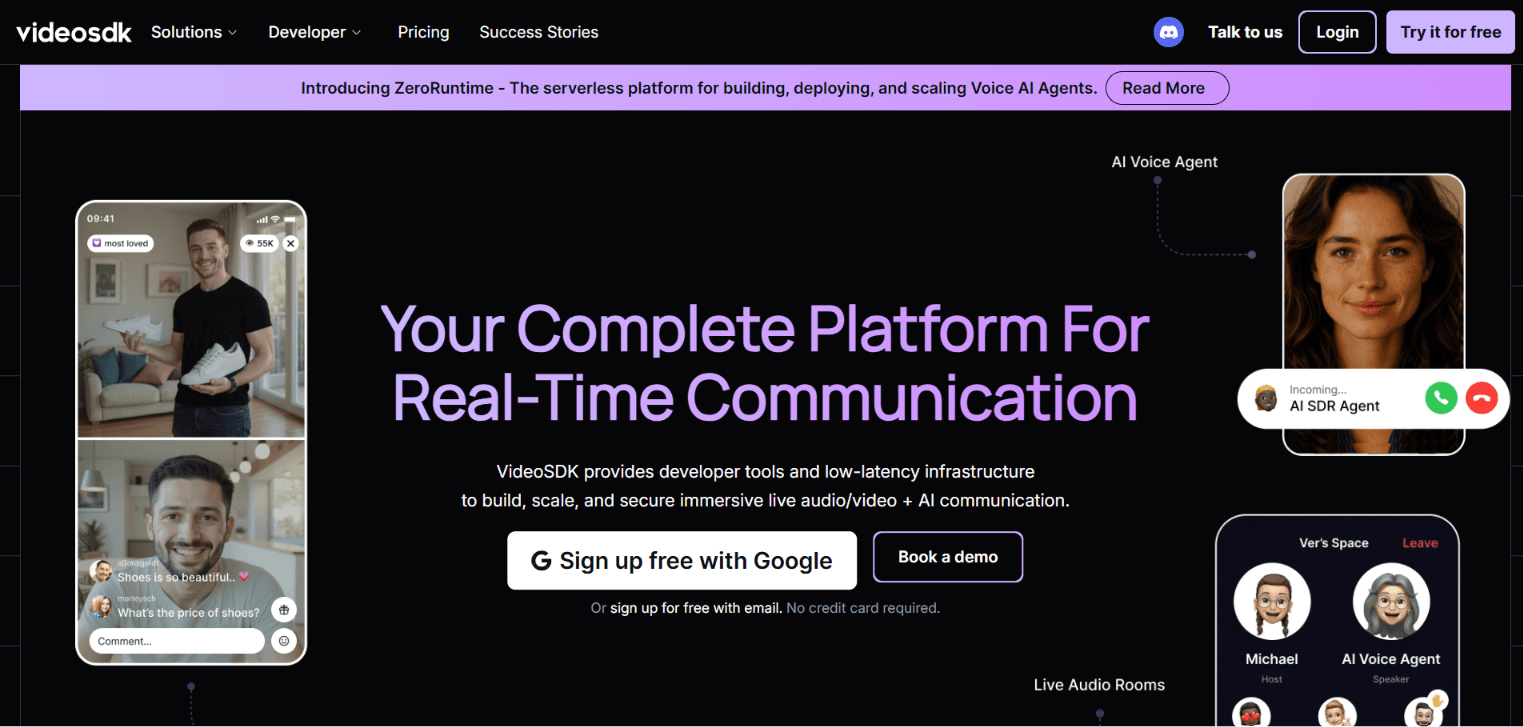
VideoSDK is the best overall ZEGOCLOUD alternative for teams that want a managed real-time video and audio stack across conventional apps and less common targets. Its current documentation lists Prebuilt, JavaScript, React, React Native, Android, iOS, Flutter, Unity, Python, C++, and IoT paths.
The product covers custom video and audio rooms, recording, transcription, RTMP output, HLS, and interactive live streaming. Its ILS documentation lists host, co-host, and audience modes with chat, polls, virtual gifts, and hand raising. The same room model can also connect SIP endpoints and AI voice agents when the application expands beyond human-to-human calls.
VideoSDK's conferencing pricing docs list $20 free credit, audio at $0.001 per participant-minute, HD video at $0.004, and Full HD or higher aggregate tiers at $0.009. Public rates should be rechecked at publication.
Best for: teams replacing ZEGOCLOUD in telehealth, edtech, social, customer support, interactive events, or embedded-device applications.
Trade-off: VideoSDK is a managed service. The free plan does not cover compliance; for compliance, you have to upgrad to the Pay-as-you-go or Enterprise Plan.
2. Agora: Best for Global RTC
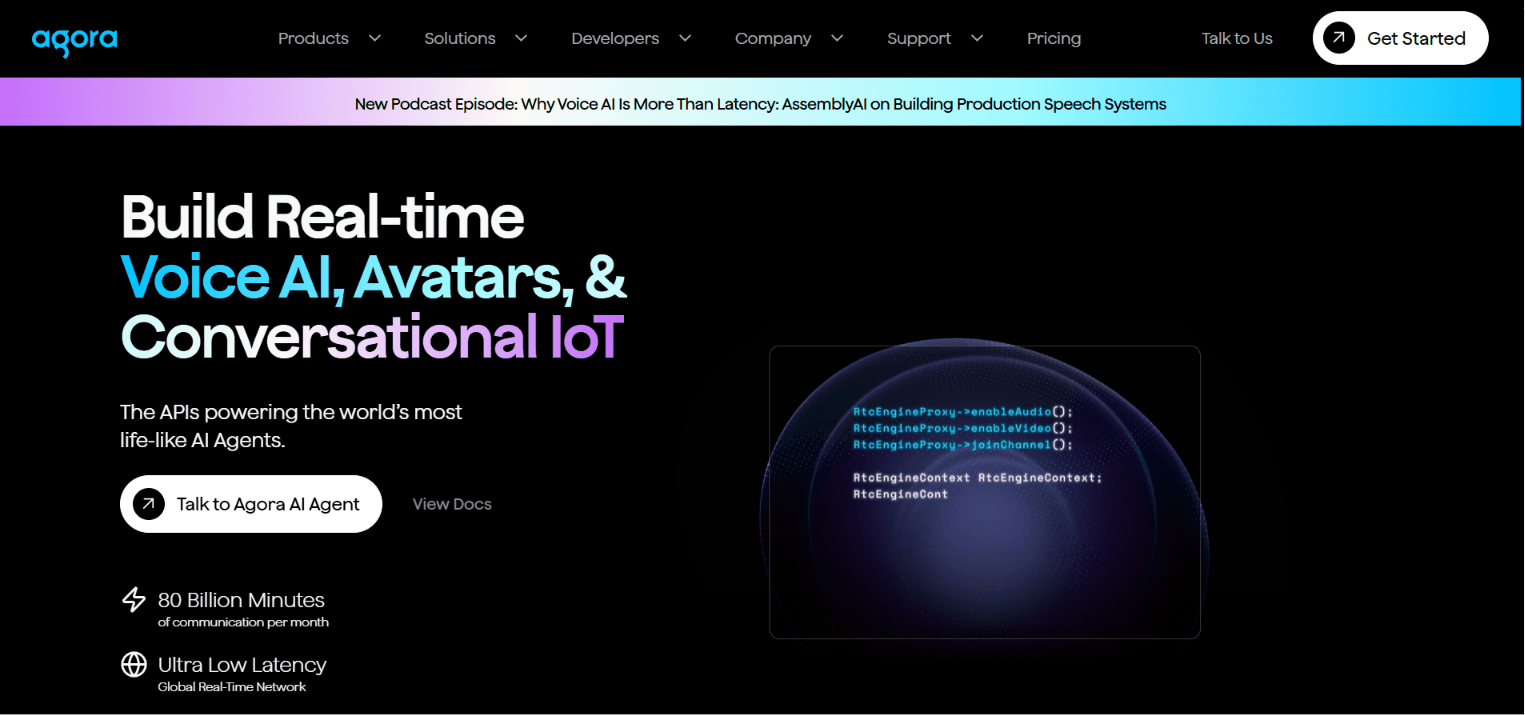
Agora is the strongest ZEGOCLOUD alternative for teams that prioritize a mature commercial RTC portfolio. Its platform covers video and voice calling, interactive and broadcast streaming, signaling, recording, analytics, transcription, translation, noise suppression, spatial audio, and media gateways.
Agora also supports a wide range of web, mobile, desktop, game-engine, and IoT environments. That breadth makes it a serious candidate for gaming, social audio, live commerce, and large international products with specialized media requirements.
As of July 2026, Agora's official pricing starts at $3.99 per 1,000 HD video minutes and $0.99 per 1,000 voice minutes, with the first 10,000 minutes free each month. Higher aggregate resolutions and add-on services use separate rates.
Best for: teams that need a deep catalog of RTC extensions, broad platform support, and an established global commercial provider.
Trade-off: the product catalog gives teams many options, but it also creates more SKUs and configuration decisions. VideoSDK is easier to model when the application mainly needs managed conferencing, ILS, and broad SDK coverage at a lower listed HD rate.
3. LiveKit: Best Open-Source Stack
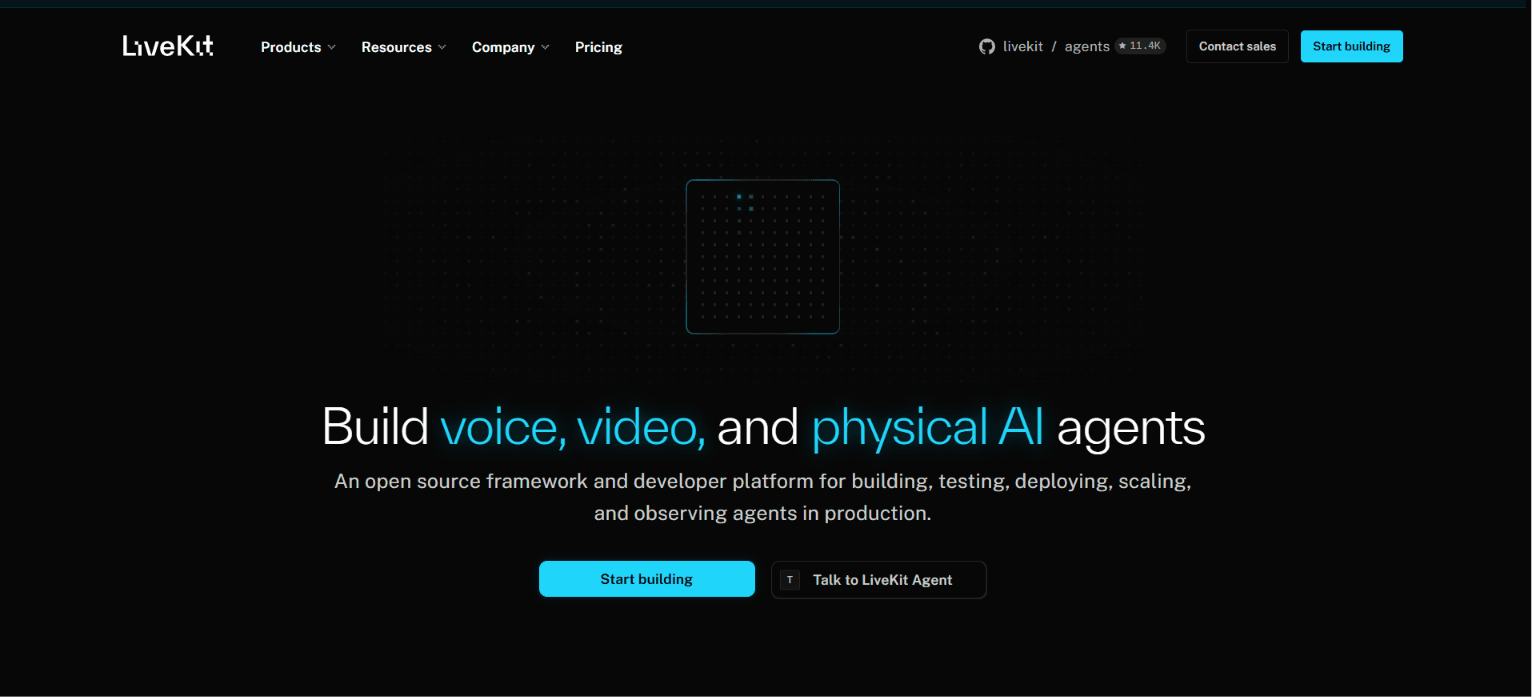
LiveKit is the best ZEGOCLOUD alternative when open-source infrastructure control is a first-class requirement. Its Apache-2.0 server repository provides an SFU-based real-time media foundation, while LiveKit Cloud offers a managed deployment.
LiveKit is also strong for voice and multimodal agents. Its current cloud documentation combines real-time audio, video, data, agent hosting, inference, telephony, and observability. Developers can keep the managed service, self-host the media stack, or use a mixed architecture.
The LiveKit Cloud pricing page lists a free Build plan with 5,000 WebRTC minutes and 50 GB of downstream transfer. The Ship plan includes 150,000 WebRTC minutes, then charges $0.0005 per minute, with data transfer and media processing metered separately.
Best for: engineering teams that want source-level visibility, deployment choice, or a shared foundation for human calls and AI agents.
Trade-off: self-hosting is not free operations. LiveKit's own deployment guide requires a trusted TLS certificate, domain, and load balancer or reverse proxy. Your team must also own scaling, TURN reachability, monitoring, upgrades, and incident response.
4. Daily: Best Prebuilt Web Path
Daily is a strong ZEGOCLOUD alternative for browser-first products that need a working call interface quickly. Daily Prebuilt embeds a complete video call component, while daily-js and Daily React support custom layouts and call logic.
Daily also documents React Native, Android, iOS, Flutter, and Python SDKs. Its REST API covers room creation, access control, recording, and other server-side operations. The product is particularly well suited to telehealth, interviews, remote consultations, and SaaS features where the browser is the primary client.
Daily's Video SDK pricing starts with 10,000 free minutes per month. Public video pricing ranges from $0.004 down to $0.0015 per participant-minute as automatic volume discounts apply. Audio-only sessions use a lower rate.
Best for: teams that value a fast web integration, a polished prebuilt call, and simple REST-driven room creation.
Trade-off: Daily's React Native documentation states that Daily Prebuilt is not supported inside react-native-daily-js. VideoSDK is a better fit when one prebuilt/custom strategy must span more mobile, game-engine, C++, or embedded targets.
5. 100ms: Best Role-Based Rooms
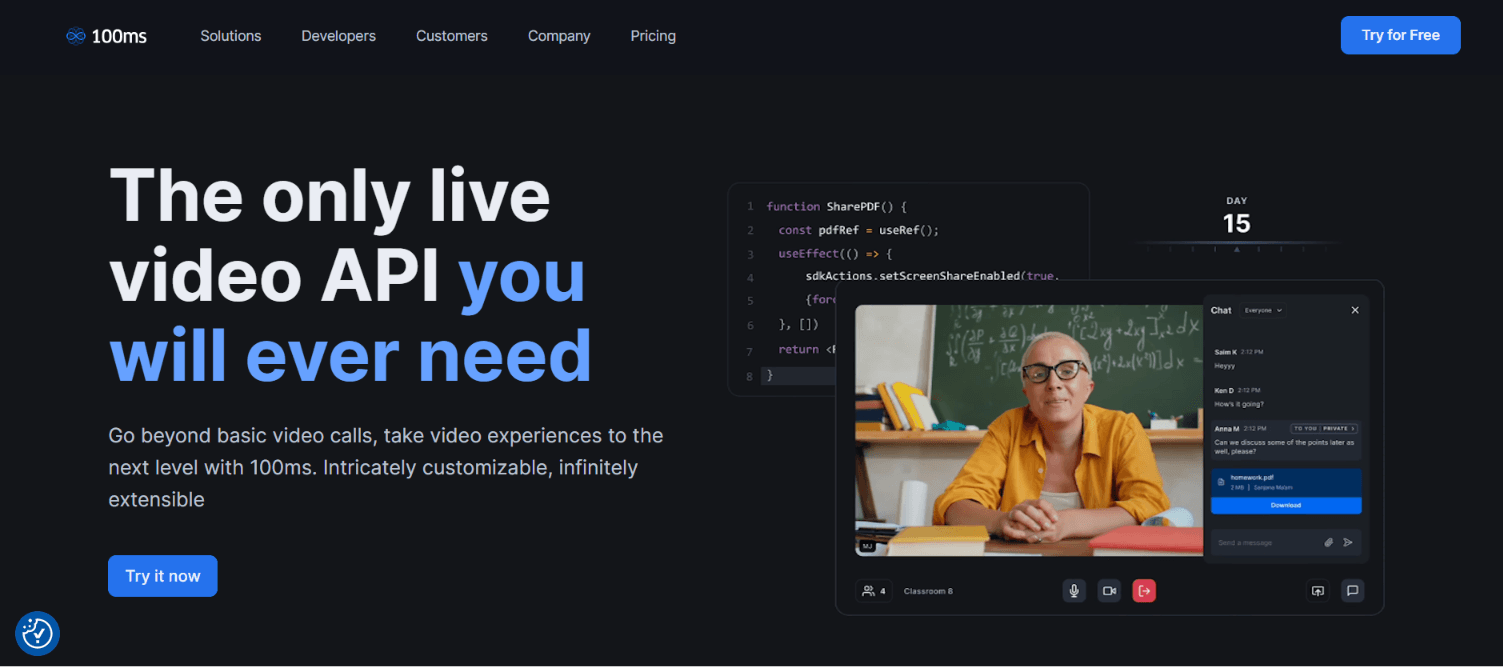
100ms is a strong alternative to ZEGOCLOUD for applications built around explicit roles and permissions. Its templates model hosts, guests, viewers, waiting-room participants, and broadcasters, which maps well to classrooms, webinars, telehealth queues, and staged events.
The platform offers custom SDKs and Prebuilt across web, Android, iOS, React Native, and Flutter. Its documentation also covers adaptive bitrate, live transcription, recording, HLS, RTMP output, whiteboards, and role-specific chat.
The current 100ms pricing page includes 10,000 conferencing minutes and 10,000 streaming minutes per month. Conferencing costs $0.004 per participant-minute after the allowance, with a stated 75% discount for audio-only use cases.
Best for: edtech, webinars, audio rooms, telehealth waiting rooms, and applications where role changes drive the user experience.
Trade-off: 100ms does not match VideoSDK, Agora, or Stream for Unity, C++, IoT, and broader desktop coverage. It can still be the better choice when templates and roles matter more than unusual client platforms.
6. GetStream: Best Unified Engagement Stack
GetStream combines video and audio with mature chat, activity feeds, and moderation products. That makes it a practical ZEGOCLOUD alternative for social networks, marketplaces, communities, gaming, live commerce, and applications that would otherwise integrate several vendors.
Its Video SDK documentation covers React, JavaScript, React Native, Android, iOS, Flutter, Unity, and ESP32. It includes composable UI components, call types, recording, broadcasting, HLS, RTMP, SIP, quality statistics, and low-bandwidth controls.
GetStream's pricing guide lists audio at $0.30 per 1,000 participant-minutes, HD video at $1.50, Full HD at $3.00, and $100 in monthly Audio/Video API usage credit. Charges use each participant's aggregate received resolution.
Best for: products that need video, voice, chat, feeds, and moderation on one vendor stack.
Trade-off: an RTC-only application may not benefit from the broader engagement platform. VideoSDK offers a more RTC-centered product surface, while GetStream is stronger when chat and social primitives are central to the roadmap.
7. Amazon Chime SDK: Best for AWS-Native Applications
Amazon Chime SDK is a strong ZEGOCLOUD alternative for development teams already operating on AWS. It provides programmable components for adding real-time video, audio, screen sharing, messaging, recording, live transcription, and telephony to web and mobile applications.
Its WebRTC media service uses an SFU architecture and supports JavaScript, iOS, Android, and Windows client libraries. A standard meeting can contain up to 25 simultaneously published video streams. Media replication can connect multiple sessions to support interactive events with audiences of up to 10,000 people. Developers can also capture meeting media to Amazon S3 or stream audio into Amazon Kinesis Video Streams for real-time analysis.
Amazon Chime SDK uses pay-as-you-go pricing without an upfront commitment. Its official pricing page lists standard WebRTC sessions at $0.0017 per attendee-minute, covering audio, video, and screen sharing under one rate. Recording, compositing, transcription, PSTN connectivity, media replication, and live streaming introduce separate usage charges.
Best for: AWS-based products that require programmable meetings, regional media placement, S3 recording, analytics integrations, or telephony capabilities.
Trade-off: Amazon Chime SDK requires more backend and AWS infrastructure knowledge than providers offering an all-in-one prebuilt experience. Its client SDK coverage is also narrower than VideoSDK or Agora, particularly for Flutter, React Native, Unity, C++, and embedded-device applications. Teams should also model the additional charges for media capture, storage, transcription, replication, and streaming before comparing total costs.
8. Vonage Video API: Best Enterprise CPaaS
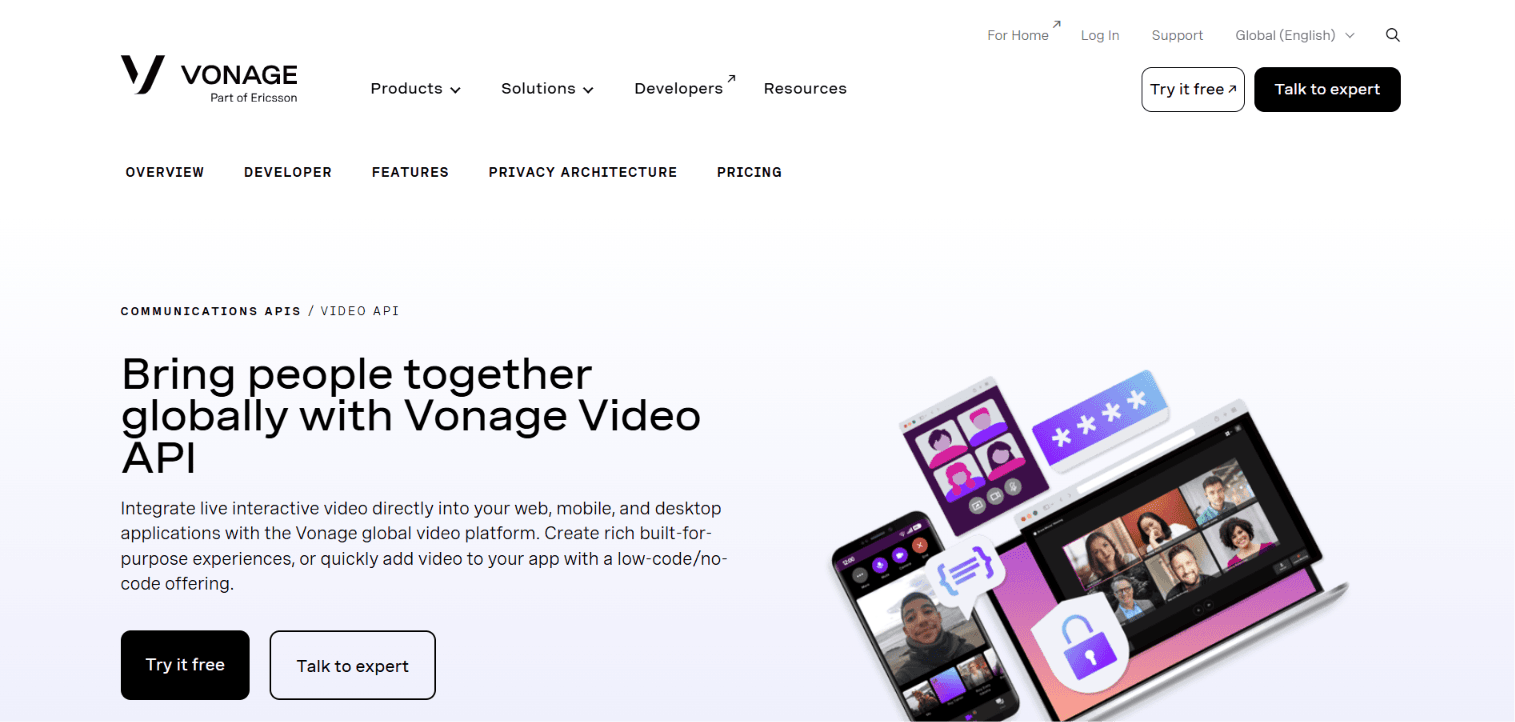
Vonage Video API is a suitable ZEGOCLOUD alternative for enterprises already using Vonage voice, messaging, verification, or contact-center services. The former TokBox/OpenTok product provides programmable sessions, publishing and subscribing, recording, broadcasting, SIP, and enterprise support.
Vonage remains an active API product in 2026. Its communications portfolio is a differentiator when video is one channel in a broader customer-communication system rather than a standalone feature.
Vonage's communications API pricing page lists Video API rates as low as $0.0041 per minute. Final cost depends on geography, volume, recording, broadcasting, SIP, and commercial terms.
Best for: regulated or enterprise teams that want video inside an existing Vonage communications relationship.
Trade-off: teams prioritizing an open media server may prefer LiveKit, while those seeking a modern prebuilt-first workflow may prefer Daily or VideoSDK. Amazon Chime SDK is a stronger fit for AWS-native applications. Vonage becomes more compelling when enterprise procurement and communications-channel consolidation matter.
9. Zoom Video SDK: Best Zoom Infrastructure
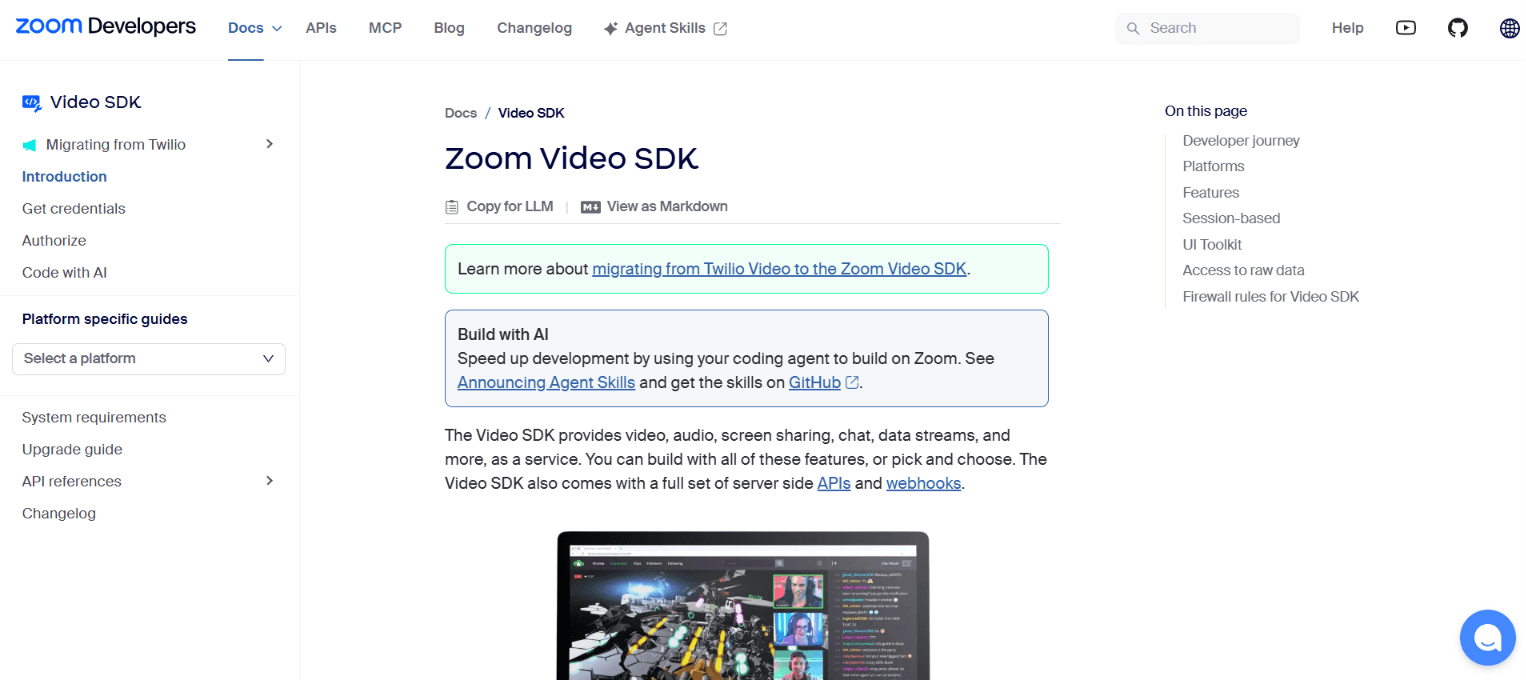
Zoom Video SDK exposes Zoom's core audio and video technology for custom applications. It includes video, audio, screen sharing, chat, data streams, server-side APIs, webhooks, cloud recording, transcription, translation, PSTN, and live streaming.
Platform coverage is a major strength. Zoom documents web, Android, iOS, Linux, macOS, Windows, Flutter, and React Native support, plus low-code UI toolkits.
Zoom's developer pricing page now uses prepaid Build Platform credits and bills Video SDK usage by minutes. Its product page advertises 20 credits per month at no charge, but the exact effective per-minute rate depends on the current credit schedule and selected services.
Best for: teams that trust Zoom's media stack, need native desktop coverage, or want Zoom's transcription, translation, and PSTN extensions.
Trade-off: the Video SDK is not Zoom Meetings. Zoom's own FAQ states that a Video SDK session cannot connect through the standard Zoom clients or join a Zoom Meeting. Use the Meeting SDK when that interoperability is the actual requirement.
10. Jitsi: Best Self-Hosted Meetings
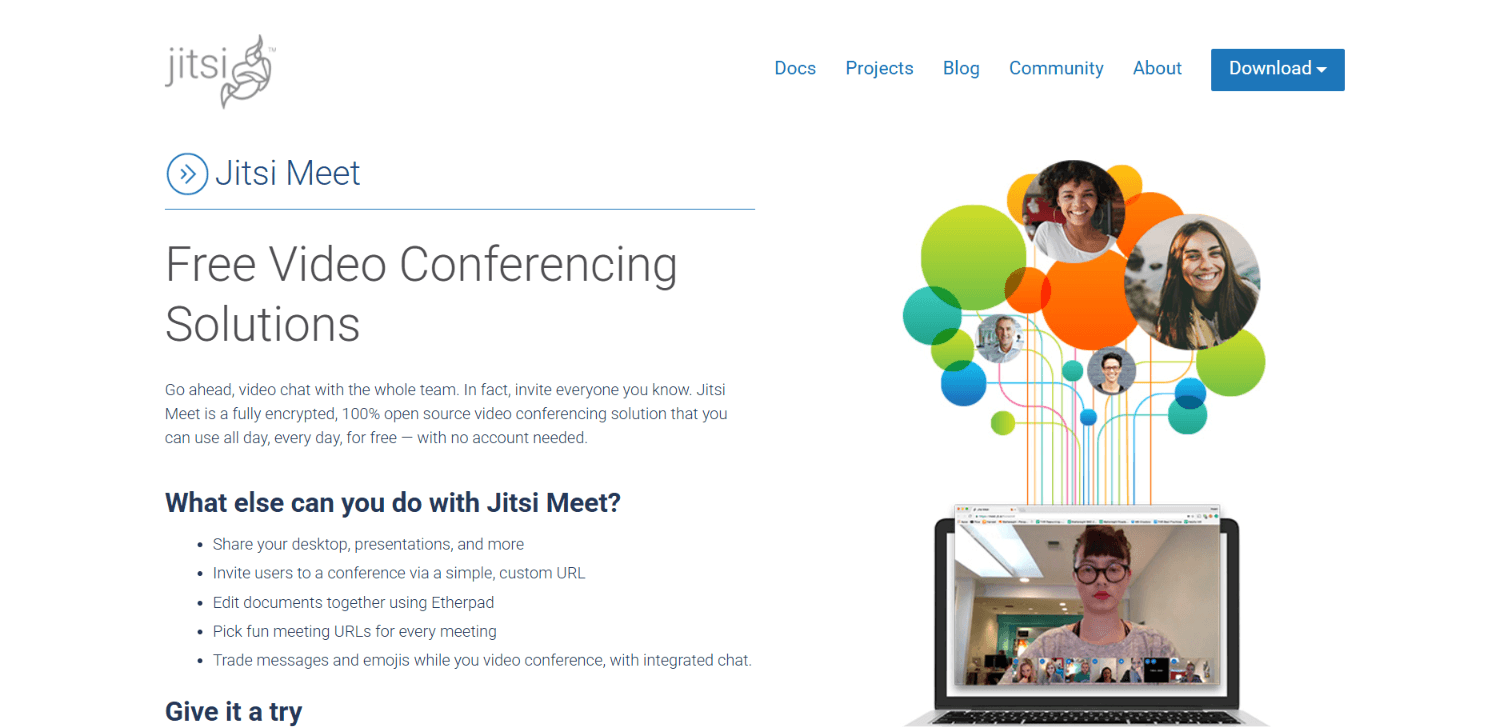
Jitsi Meet is the best ZEGOCLOUD alternative for teams that want a mature open-source meeting application and accept infrastructure ownership. The stack includes a React and React Native client, XMPP signaling components, Jicofo, Jitsi Videobridge, recording and streaming components, and iframe/mobile integration options.
The software is free and open source. A self-hosted deployment still creates cloud compute, bandwidth, TURN, recording, monitoring, security, upgrade, and staffing costs. Jitsi's self-hosting guide supports current Debian and Ubuntu releases and expects administrator access.
Best for: privacy-sensitive teams, internal platforms, public-sector deployments, and organizations with WebRTC operations expertise.
Trade-off: Jitsi provides control rather than a turnkey SLA. VideoSDK, Agora, Daily, 100ms, and Vonage remove much of that operational burden. LiveKit is often the closer open-source choice for teams that want a lower-level programmable media platform rather than a meeting application.
ZEGOCLOUD Alternatives Pricing Compared
Public list prices help narrow ZEGOCLOUD alternatives, but they are not directly interchangeable. Vendors meter by participant time, received resolution, bandwidth, plan allowance, preset type, recording output, or a combination of these units.
Prices below were checked on July 14, 2026. They exclude negotiated discounts, taxes, support, compliance add-ons, recording, transcription, storage, egress, and streaming unless stated.
| Provider | Public entry point for video | Free starting allowance | Billing caveat |
|---|---|---|---|
| ZEGOCLOUD | $3.99 per 1,000 HD participant-minutes | 10,000 minutes/month | Resolution and product-specific add-ons |
| VideoSDK | $3.00 per 1,000 HD participant-minutes | $20 Free | Aggregate received resolution |
| Agora | $3.99 per 1,000 HD minutes | 10,000 minutes/month | Resolution tiers and separate extensions |
| LiveKit Cloud | Plan-based; Ship overage $0.50 per 1,000 WebRTC minutes | 5,000 WebRTC minutes on Build | Downstream data and processing also apply |
| Daily | Up to $4.00 per 1,000 video participant-minutes | 10,000 minutes/month | Automatic volume rate can fall to $1.50 |
| 100ms | $4.00 per 1,000 conferencing participant-minutes | 10,000 minutes/month | Separate streaming and encoding meters |
| Stream | $1.50 per 1,000 HD participant-minutes | $100 monthly usage credit | Aggregate received resolution |
| Amazon Chime SDK | $1.70 per 1,000 attendee-minutes | No free allowance listed | Recording, transcription, media replication, storage, and live streaming cost extra |
| Vonage Video API | As low as $4.10 per 1,000 minutes | Trial credit may vary | Volume, region, and add-ons affect cost |
| Zoom Video SDK | Credit and minute based | 20 Build Platform credits/month | Convert credits using the current service schedule |
| Jitsi | Open-source software | Not applicable | Infrastructure, bandwidth, and operations are yours |
For a simple list-price example, one million HD participant-minutes cost $3,000 on VideoSDK and $3,990 on ZEGOCLOUD, a $990 difference before add-ons or discounts. That calculation is useful for screening, not procurement. A realistic model must replay your participant mix, received tile resolutions, audio-only time, recordings, live-stream viewers, and regional requirements against each provider's calculator.
Which ZEGOCLOUD Alternative Should You Choose?
The right ZEGOCLOUD alternative follows the constraint your product cannot compromise on.
- Choose VideoSDK when you want managed video, audio, prebuilt UI, interactive live streaming, and unusually broad client coverage under one RTC-focused product.
- Choose Agora when global commercial RTC depth, gaming, spatial audio, or a large extension catalog matters more than pricing simplicity.
- Choose LiveKit when open-source deployment control or a shared human-call and voice-agent foundation is mandatory.
- Choose Daily when the browser and a fast prebuilt experience are your primary delivery path.
- Choose 100ms when roles, templates, waiting rooms, classrooms, and webinars define the product.
- Choose Stream when video must share identity, moderation, chat, and activity feeds.
- Choose Amazon Chime SDK when your application already runs on AWS and requires regional media placement, S3-based media capture, Kinesis integrations, or programmable telephony.
- Choose Vonage when video is one part of an enterprise CPaaS strategy.
- Choose Zoom Video SDK when Zoom's media infrastructure and desktop support matter, but standard Zoom Meeting interoperability does not.
- Choose Jitsi when self-hosting, source access, and data-path control justify the operational work.
Staying with ZEGOCLOUD is also a valid decision. Keep it when the current integration meets your call-quality targets, AI effects and social features matter, required platforms are covered, and the migration cost exceeds the measurable benefit.
Definitions Glossary
Participant-minute: One participant connected for one minute. VideoSDK, ZEGOCLOUD, Daily, and several other managed providers use this unit, sometimes with resolution tiers.
SFU: A Selective Forwarding Unit receives media streams and forwards selected layers to participants. Managed VideoSDK rooms, LiveKit, Amazon Chime SDK meetings, and Jitsi Videobridge use SFU-style media routing.
Prebuilt UI Kit: A drop-in meeting interface that handles the common call lifecycle and controls. VideoSDK Prebuilt targets fast deployment, while the programmable SDK supports a custom interface.
Interactive Live Streaming: A low-latency broadcast model where audience members can interact or become speakers. VideoSDK ILS uses host and audience modes inside its RTC architecture.
Provider adapter: An application-owned interface that isolates room, participant, and track logic from one vendor SDK. It reduces migration risk and keeps rollback possible.
Related VideoSDK Guides
- React video and audio quickstart
- Authentication and token guide
- Prebuilt video and audio quickstart
- Interactive live streaming overview
- VideoSDK code samples
Key Takeaways
- VideoSDK is the best overall ZEGOCLOUD alternative for the managed, cross-platform RTC scenario scored in this review.
- Agora is the stronger conditional choice for teams that prioritize a mature extension catalog and specialized global engagement features.
- LiveKit and Jitsi are better choices when source access or self-hosting outweighs operational simplicity.
- Public per-minute rates are screening inputs, not final cost models, because vendors meter resolution, bandwidth, presets, and add-ons differently.
- A provider adapter, production scorecard, canary release, and rollback window reduce the risk of replacing a live RTC stack.
Conclusion
The best ZEGOCLOUD alternatives solve different constraints. VideoSDK offers the strongest managed balance for broad client coverage, programmable video and audio, Prebuilt, and interactive streaming. Agora favors commercial RTC depth, while LiveKit and Jitsi favor infrastructure control. Validate the shortlist with your traffic and migration scorecard, then start a VideoSDK account or follow the React quickstart. What kind of real-time experience are you building?
Frequently Asked Questions
What Is the Best ZEGOCLOUD Alternative?
The best ZEGOCLOUD alternative for a managed, multi-platform RTC application is VideoSDK because it covers custom and prebuilt calls, interactive live streaming, mobile SDKs, Unity, C++, and IoT. Agora can be better for specialized engagement features, while LiveKit is better when open-source deployment control is mandatory.
Is VideoSDK Cheaper Than ZEGOCLOUD?
VideoSDK's listed HD rate is lower than ZEGOCLOUD's as of July 14, 2026: $3.00 versus $3.99 per 1,000 participant-minutes. Actual cost depends on received resolution, audio-only usage, recording, streaming, support, discounts, and taxes, so model a representative month before deciding.
Is ZEGOCLOUD Free to Use?
Yes, ZEGOCLOUD offers a free starting allowance. Its public pricing page advertises 10,000 free minutes, after which product-specific voice, video, streaming, chat, recording, and other rates apply.
Which ZEGOCLOUD Alternatives Are Open Source?
LiveKit and Jitsi are the main open-source ZEGOCLOUD alternatives in this list. LiveKit provides a programmable real-time media server plus managed cloud, while Jitsi provides a complete meeting stack; self-hosting either option transfers infrastructure and reliability work to your team.
Does VideoSDK Support ZEGOCLOUD Migration?
VideoSDK supports the building blocks needed for a ZEGOCLOUD migration, including server-side tokens, REST room creation, participant and track events, recording, streaming, and SDKs across web and mobile. There is no universal one-click migration, so use a provider adapter and port features in controlled stages.
Which Alternative Is Best for Live Streaming?
The best live-streaming alternative depends on the interaction model. VideoSDK, Agora, and 100ms suit low-latency events where viewers can interact or join the stage. LiveKit offers a programmable WebRTC path, while Amazon Chime SDK can send meeting video to third-party streaming platforms through its Media Live Connector. Conventional one-way broadcasts may be cheaper on an HLS-focused service.
What Should I Test Before Switching?
Before switching, test join success, time to first frame, audio continuity, video freezes, reconnection, packet loss, jitter, round-trip time, screen sharing, recording, webhooks, mobile background behavior, and cost per completed call. Run the same test matrix across representative devices, browsers, networks, and regions.